

Development & Humanitarian
Operational discipline that holds in the environments where it has to.

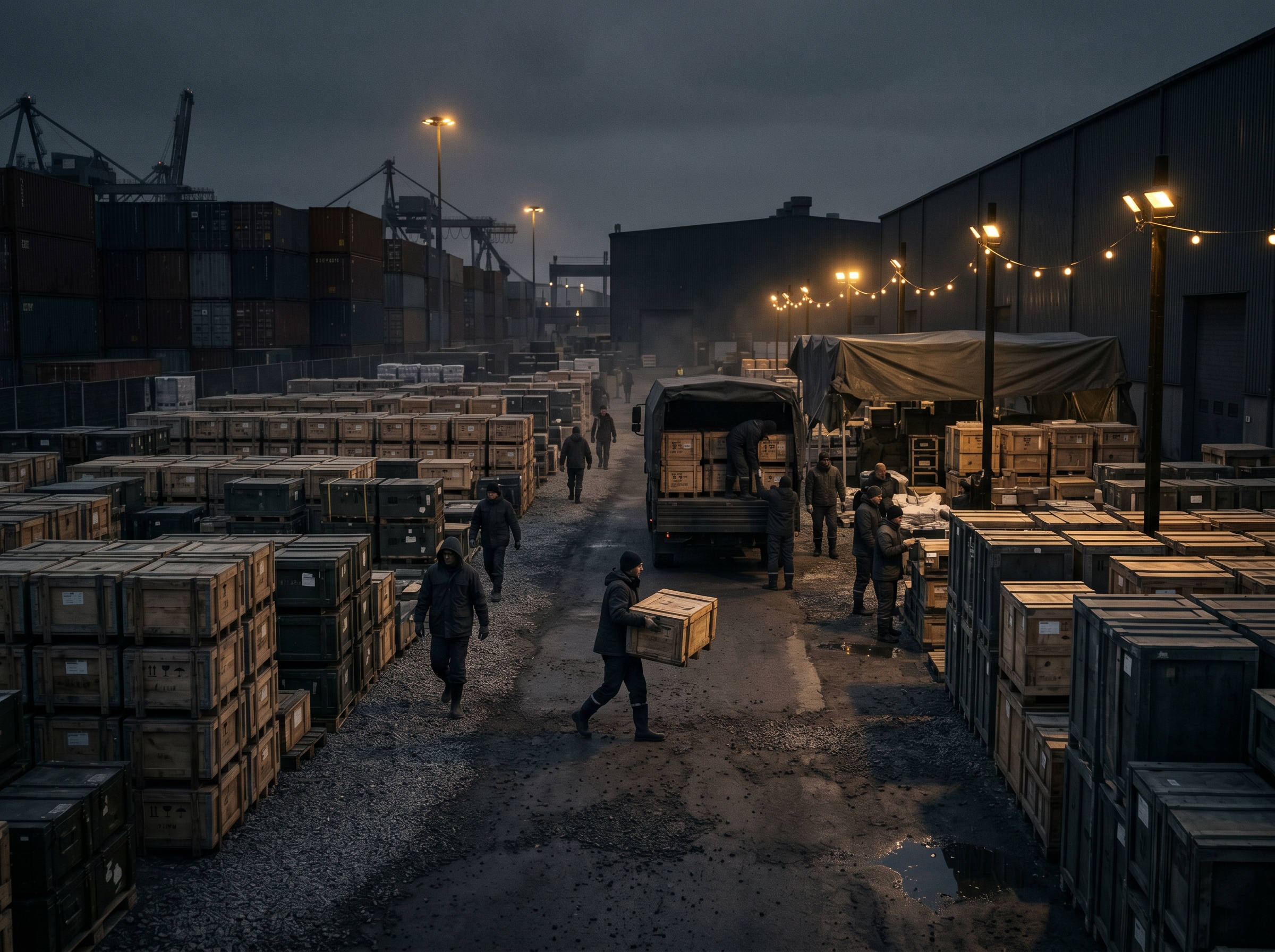
The supply chain is the program.
Development and humanitarian programs, donor-funded programs, NGO operators, post-conflict reconstruction efforts, and the field implementations behind them, run in environments where local capacity is insufficient, compromised, or absent. Donors expect a defensible audit trail. Host authorities expect a documented liaison framework. Field staff carry duty-of-care obligations the program cannot delegate. Beneficiary populations carry a standing claim on the program's integrity that does not lapse with a transition of funding. The work is capability-shaped, not NGO-shaped. The firm runs the operational scaffolding, the supply chain, the camp and site, the evacuation pathway, the explosive-remediation program, the medical and disaster response, the protective posture for staff at named locations, that lets the program operator deliver against its mandate.
Through procurement, security, and operations leads.
The firm engages development and humanitarian clients on project and managed terms, generally through the program operator's procurement, security, or operations function. Workstreams cover supply-chain resilience for life-support consumables, camp and site support, explosive-remediation, evacuation, medical and disaster response, and protective posture at named program locations. Reporting cadence is calibrated to the donor's standard. The firm declines engagements where the supply chain cannot be reconstructed against that standard.
Project mandate
Survey, clearance, post-clearance certification, or single-deliverable workstreams against the host authority's framework.
Managed engagement
Sustained camp and site, supply-chain, and protective posture across multi-region program deployments.
Advisory retainer
Standing counsel to program leads on threat picture, supply-chain reconstruction, and beneficiary-context work.
Crisis support
Response cells stood up for staff extraction, dependent welfare, and continuity of care on donor-reportable terms.
In post-conflict programming, the supply chain is the program.
Continuity sustained. Land returned.
Selected engagements abstracted to the standard at which they can be discussed in public, each closed against the donor's audit framework.
Response cell stood up rapidly, all staff extracted.
A donor-funded program lost contact with field staff during a rapid-onset deterioration. A response cell stood up within a compressed window; all staff and dependents reached a contracted extraction within the agreed window, on terms reportable to the donor and host authority. The post-incident record closed the engagement against the audit framework.


Explosive remediation across post-conflict districts, land returned.
A national authority commissioned an explosive-remediation program across multiple post-conflict districts. Survey, clearance, and post-clearance certification were delivered against the host authority's framework on a single audit trail; the relevant land was returned to civilian use inside the contracted window.
Camp and site sustained across field locations.
A multi-region program retained the firm to operate camp and site support across numerous field locations through a multi-year deployment. Power, water, accommodation, and movement support were sustained through successive regional disruptions on a single duty-of-care framework.
Methods on the record.

on the irreversibility of decisions
Every fragile engagement has a last reversible point. Naming it, and timestamping it, is the analytic act that distinguishes counsel from commentary.

the four-tier vetting standard
How UG screens its operators, analysts, and engineers, and why the screening is the engagement
The capability spine for development and humanitarian work.
Stabilization and humanitarian operations is the spine of this market, with field operations and intelligence advisory in support.
Most development and humanitarian engagements begin with a one-hour conversation.
Engagements are introduced by written approach to the program's procurement, security, or operations lead, and run under the program's mandate framework.